
The Ultimate Guide to Choosing the Best International eSIM for Global Travel
For travelers frustrated by physical SIM swaps and roaming charges, an international eSIM offers a seamless digital alternative. This embedded SIM profile allows instant connection to local networks worldwide without needing a physical card. Its primary advantage is the ability to manage multiple data plans from a single device, enabling cost-effective connectivity the moment you land.
The Shift Away from Physical SIM Cards
The shift away from physical SIM cards eliminates the need to source, swap, or store tiny plastic chips when traveling. Instead, international eSIMs allow you to download a digital profile directly to your phone, instantly connecting to a local network upon arrival. This removes the friction of hunting for a local vendor or risking lost cards.
A key insight is that you can maintain your primary home eSIM active for calls and banking while the international eSIM handles data, creating a seamless dual-line setup without hardware changes.
You pre-purchase data plans before departure, and toggling between carriers becomes a simple setting change rather than a tray ejection.
Why Travelers Are Ditching Plastic SIMs
Travelers are abandoning plastic SIMs because the physical swap is a logistical bottleneck. Arriving in a new country, hunting for a local vendor, and juggling tiny cards is inefficient. An international eSIM eliminates this by letting you purchase and activate a regional data plan from your phone before departure. You land connected, avoiding roaming fees without losing your primary number. The question arises: Why are travelers ditching plastic SIMs for eSIMs? Because it removes the friction of manual replacement, the risk of losing the physical card, and the inability to switch between multiple carriers instantly—all while keeping your home line active for verification codes.
How Embedded SIM Technology Works Across Borders
An embedded SIM (eSIM) lets you switch between international networks by storing multiple carrier profiles directly on your device’s chip. Before crossing a border, you download a local data plan to your eSIM-compatible device, which then authenticates with a foreign tower using over-the-air credentials. This process eliminates swapping physical cards, as the eSIM dynamically selects the strongest available local network in real-time, maintaining seamless connectivity across borders without manual intervention.
- Pre-downloads operator profiles before travel, activating upon arrival at a new country.
- Stores multiple profiles, letting you switch carriers via device settings without changing hardware.
- Uses remote provisioning to update network access credentials automatically when crossing borders.
Core Benefits of Staying Connected Abroad

An international eSIM ensures you maintain instant connectivity abroad without the hassle of physical SIM swaps. This core benefit eliminates roaming fees by allowing you to purchase local or regional data plans before or immediately upon arrival. You can keep your primary number active for calls and texts while using eSIM data for maps and messaging apps, preventing isolation. The ability to switch between multiple eSIM profiles means you are never offline when navigating unfamiliar locations or coordinating meetups. This reliable, always-on connection directly supports essential tasks like booking accommodation and sharing updates, making travel smoother and safer.

Saving Money on Roaming Without Sacrificing Speed
An international eSIM eliminates traditional roaming surcharges by allowing users to purchase local or regional data plans directly. This bypasses the inflated per-MB costs of a home carrier, ensuring you only pay for the speed tier you need. Instead of throttled “free roaming” that creates bottlenecks, eSIMs provide access to native 4G/5G infrastructure at competitive flat rates, preserving high-speed connectivity for critical tasks like navigation and video calls. Cost per gigabyte drops dramatically when you select a plan optimized for your itinerary. Q: Can I truly get unlimited high-speed data for less than a legacy daily roaming pass? A: Yes—by comparing eSIM providers for destination-specific plans, you often secure faster speeds at a fraction of the cost, as you avoid paying your home carrier’s premium markup.
Activating Service Before You Land
Activating your international eSIM before departure ensures immediate connectivity upon landing. This proactive step eliminates the need to find local Wi-Fi or search for physical SIMs at airport kiosks. Pre-travel activation allows you to install the eSIM profile, configure APN settings, and confirm your data plan is ready while still on home Wi-Fi. Pre-activation typically requires a stable internet connection for the download; once installed, the eSIM waits for the local network. Upon arrival, simply power on your device or enable the eSIM line—no manual setup is needed. This guarantees seamless coverage for taxi bookings, maps, or messaging the moment you step off the plane, avoiding roaming gaps.
Keeping Your Primary Number Active Simultaneously
An international eSIM enables dual SIM functionality, allowing your physical primary number to remain active for SMS and calls while the eSIM handles data abroad. This eliminates the need to swap cards or pay roaming fees on your home line. You retain access to critical services like banking OTPs, two-factor authentication, and call forwarding. The eSIM operates concurrently, so you can navigate with local data without disconnecting your home network. This setup ensures your primary number stays reachable for emergencies, while all data consumption shifts to the affordable eSIM plan, logically separating communication channels.
- Receive SMS verification codes on your primary number without interruption.
- Keep your home line active for incoming calls while using local data.
- Use your primary number for essential account recovery and app logins.
- Avoid missing critical alerts by keeping both lines operational simultaneously.
Understanding Plan Types and Data Packages
You’re cramming for a presentation in a Tokyo coffee shop, your local SIM dead on arrival. The panic hits as you open your eSIM app. Understanding plan types and data packages becomes your lifeline: a regional plan covers Japan, South Korea, and Taiwan for $20, while a global plan would waste money on Europe you’re not visiting. You spot a data-only package—no calls needed, just 5GB for mapping and Slack. You pick the 30-day validity, not the 7-day one, because your trip stretches into next week. That split-second choice saves you from buying a second eSIM mid-trip and keeps your PowerPoint slides loading, not buffering.
Regional vs. Global Data Bundles
Choosing between regional and global data bundles directly impacts coverage and cost for international eSIM users. A regional bundle, such as for Europe or Asia, pools data allowances across multiple countries within that zone, offering lower per-GB rates for travelers staying in a defined area. A global bundle provides connectivity across continents but at a higher price point, suitable for multi-region itineraries. Regional bundle cost efficiency suits single-zone trips. To decide, follow this sequence:
- Map all destination countries on your itinerary.
- Check if they fall under one regional eSIM zone.
- If yes, select a regional plan for savings; if not, opt for a global plan.
Each bundle type uses identical eSIM technology; the difference lies in data pricing and geographical scope.
Pay-As-You-Go Options Versus Subscription Models
For international eSIMs, pay-as-you-go options offer upfront data top-ups that expire after a set period, ideal for short trips or unpredictable usage. In contrast, subscription models provide a fixed monthly data allowance recurring until canceled, suiting frequent travelers. Pay-as-you-go avoids long-term commitment but risks higher per-gigabyte costs, while subscriptions lower the per-unit price for consistent demand. Choose pay-as-you-go for flexibility; opt for a subscription when data needs are regular. The key distinction is commitment versus cost efficiency in data consumption.
Pay-as-you-go offers no-strings-attached flexibility at a premium; subscriptions lock in lower rates for ongoing access.
Unlimited Data Offers and Fair Use Policies
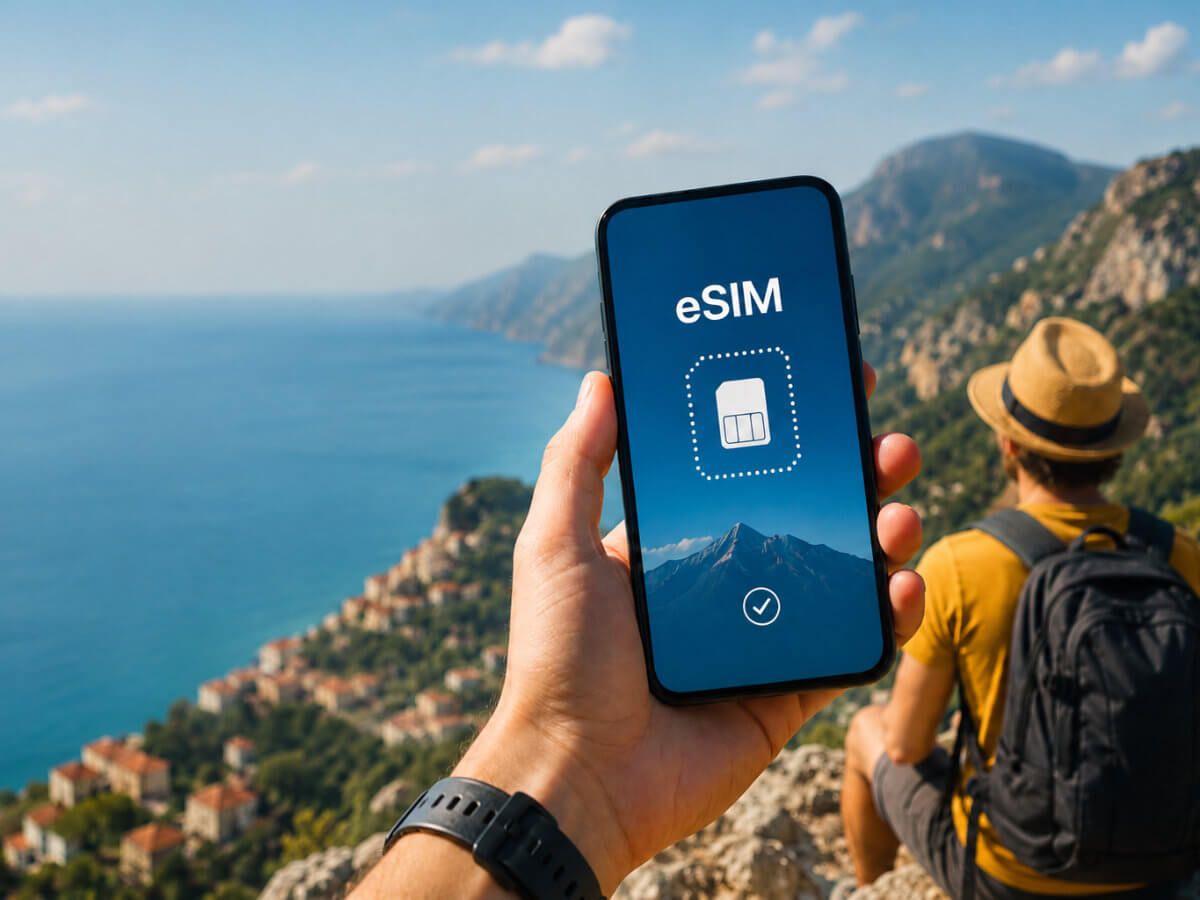
When evaluating international eSIMs, “Unlimited Data Offers and Fair Use Policies” often conceal critical restrictions. A plan labeled “unlimited” typically includes a high-speed data cap, after which speeds drop to unusable 2G or 128 kbps. Fair Use Policies (FUP) limit the amount of truly fast data you can consume, often resetting daily or weekly. Always check the FUP threshold before purchase; a 1GB daily cap is far more practical than vague “unlimited” marketing that throttles after minimal usage. Ignoring the fine print leaves you stranded with buffering video streams abroad.
Unlimited data offers always hide a fair use cap; verify the high-speed limit before relying on an international eSIM for demanding travel tasks.
Device Compatibility and Setup
Device compatibility for international eSIM requires an unlocked handset with eSIM support, typically from 2018 onwards for major brands like Apple, Samsung, and Google. Setup involves scanning a QR code from your provider or using a dedicated app to download the eSIM profile, which must be installed while connected to Wi-Fi. A critical first step is confirming your device is not carrier-locked, as this prevents adding other eSIM profiles. Most dual-SIM setups allow you to keep your physical home SIM active for calls while using the eSIM exclusively for data. Ensure your phone’s carrier settings are updated before travel to avoid profile issues during installation.
Checking If Your Phone Is eSIM-Ready
Before purchasing an international eSIM, you must verify your device supports this technology. Most recent flagship models from Apple, Samsung, and Google are eSIM-compatible, but older or carrier-locked phones may not be. Checking your phone’s IMEI for eSIM readiness is the most reliable method—dial *#06# or navigate to Settings > About Phone to find it. Then, consult your manufacturer’s official compatibility list or use your carrier’s eSIM checker tool. Critical: Ensure your phone is unlocked from any domestic carrier, as eSIM provisioning often fails on locked devices.
Common Installation Steps via QR Codes or Apps
Installing an international eSIM typically starts with scanning a QR code sent via email or displaying it on another device. This triggers automatic profile download into your phone’s settings. Alternatively, many providers offer a dedicated app where you purchase and install eSIM with a single tap, bypassing manual QR scanning. Both methods require a stable Wi-Fi connection at the outset to avoid data gaps during activation. Follow on-screen prompts to label the line (e.g., “Travel Data”) then set it as your primary cellular plan for roaming.
- Open your phone’s settings, select “Add Cellular Plan,” then scan the provided QR code
- Use the provider’s mobile app to buy, download, and activate the eSIM instantly
- Ensure your device is unlocked and supports eSIM before beginning installation
- Keep the QR code or app confirmation accessible until the profile fully activates
Managing Multiple Profiles on One Device
Managing multiple profiles on one device is streamlined by modern eSIM technology, allowing users to store several international eSIM profiles simultaneously without swapping physical cards. You can assign distinct profiles for travel, work, or personal use, switching between them via your device’s settings menu. This enables seamless profile switching for different regions or data plans, with most handsets supporting up to ten eSIM profiles, though only two can be active at once. For clarity, label each profile by destination or purpose to avoid confusion when activating data roaming.
Managing multiple profiles means you can pre-load and toggle international eSIMs per trip, keeping your home line active for calls while China eSIM using another for local data.
Selecting the Right Provider for Your Trip
Selecting the right provider for your trip starts with checking if they offer coverage in every country on your itinerary, not just the main ones. Compare data limits and speed caps, as “unlimited” plans often throttle you after a certain threshold. Look for a provider with a simple app and 24/7 chat support, since you’ll need help if activation fails at 2 AM. A cheap plan is useless if recharging it requires a frustrating multi-step process mid-trip. Finally, read the fine print on voice and SMS inclusions—many eSIMs are data-only, so you’ll need a separate service for calls. Prioritize providers with flexible, top-up-only plans so you can adjust data without buying a whole new eSIM.
Comparing Coverage in Remote Destinations
For remote destinations, direct carrier partnerships are critical. A budget eSIM often relies on roaming agreements with weak regional players, dropping your connection in the Amazon or on a Himalayan trail. Premium providers partner with local towers, ensuring signal where others fail. Before buying, check if your provider lists specific coverage for, say, the Galápagos or Mongolia’s steppes. Map-based apps can verify this. Q: How do I confirm real-world coverage for a remote zone? A: Look for an eSIM that shares actual user-verified maps of off-grid cell towers, not vague country outlines.
Reading the Fine Print on Speed Throttling
When selecting an international eSIM, reading the fine print on speed throttling is critical. Providers often advertise “unlimited data,” yet bury a fair-use cap that triggers severe slowdowns after a few gigabytes. Check whether the throttle reduces you to 2G, 128 kbps, or faster 5 Mbps—this dictates if maps will still load or become unusable. Also note if throttling resets daily or lasts the entire trip. Q: How can I confirm the real post-throttle speed? Look for the “Fair Usage Policy” or “Speed After Cap” section in the provider’s terms, which lists the exact Mbps or network tier you drop to.
Customer Support Availability in Different Time Zones
When choosing an international eSIM, check if their support team operates in your time zone or offers 24/7 help. Nothing’s worse than hitting a data snag at 3 AM in a foreign country with no one to answer. Look for providers with live chat or WhatsApp support that’s actually staffed around the clock, not just a bot. Some eSIMs offer a time zone-specific support team for key regions, so prioritize those if you’re hopping across multiple zones. That way, you’re never left stranded without connectivity.
Navigating Network Transitions and Signal Stability
When traveling, an international eSIM eliminates the hassle of physical SIM swaps, but navigating network transitions between countries requires attention to signal handoff. Your device may briefly display “No Service” as it searches for a new local partner; enabling data roaming and toggling airplane mode can force a fresh registration, stabilizing connectivity within seconds. For signal stability, prioritize eSIM profiles from providers that offer multi-network access, as they automatically fall back to alternative carriers if the primary network weakens. Manually selecting a network in your phone’s settings—rather than relying on automatic scanning—prevents stuck transitions during border crossings. Consistently check your eSIM’s coverage map before traveling; rural or tunneled areas may demand a secondary profile as a fail-safe. These simple steps ensure your connection remains uninterrupted as you move across borders.
Automatic Carrier Switching in Foreign Countries
When roaming abroad, automatic carrier switching dynamically hops your eSIM between local partner networks to lock onto the strongest signal, eliminating manual hunting. The moment one tower gets congested, your device seamlessly shifts to a less loaded provider, keeping your maps, messages, and streaming alive. This real-time handoff prevents dropouts in crowded transit hubs or remote countryside, adapting to fluctuating coverage without interrupting your connection.
- Switch happens in the background within seconds to avoid dead zones
- Prioritizes low-latency carriers for active calls and video calls
- Automatically reverts to your home carrier’s strongest partner when signal weakens
Dealing with Data Drops in Rural Areas
When traversing rural zones with an international eSIM, data drops often stem from weak signal penetration, not provider error. Counteract this by pre-loading offline maps for route navigation, ensuring your app and device priories manual network selection rather than automatic hopping. If a drop occurs, toggling airplane mode forces a fresh scan, often locking onto a stronger adjacent tower. Crucially, prioritize roaming partner networks with known rural coverage, as major carriers frequently subsidize remote infrastructure. Adjust your device’s preferred network type to 4G, as 5G signals dissipate faster over distance. This proactive stance minimizes disruptive outages during critical travel segments.
Practical Tips for Business and Leisure Travelers
For business travelers, buy and activate your eSIM before departure to ensure instant connectivity upon landing for urgent emails or ride-hailing apps. Leisure travelers should compare data-only vs. calls+texts plans; a small data add-on often suffices for maps and social media. Avoid surprise roaming fees by manually disabling your primary SIM’s data and routing all traffic through the eSIM. Keep a screenshot of your eSIM’s QR code handy in case you need to reinstall it on another device. For multi-country trips, pick a regional plan covering all destinations to avoid juggling multiple eSIMs.
Using eSIM as a Backup for Critical Work
For critical work, an eSIM acts as a failover connection if your primary physical SIM fails or loses signal abroad. Before traveling, install a backup eSIM profile from a provider offering global coverage and keep it deactivated. This ensures you can instantly switch networks without visiting a local store. Using eSIM as a backup for critical work also safeguards against lost or damaged physical SIM cards, allowing you to maintain access to essential cloud apps and communication tools.
How do I test if my backup eSIM works for critical tasks before a trip? Enable the eSIM in airplane mode, disable your primary SIM, then run a video call or file upload to confirm stable connectivity and data speeds.
Mapping and Translation Features Without Wi-Fi
An international eSIM ensures offline mapping and translation tools remain functional by providing a persistent data connection, eliminating reliance on spotty Wi-Fi. Apps like Google Maps allow you to download regional maps in advance, while the eSIM’s data stream refreshes real-time traffic and transit updates without Wi-Fi. For translation, tools such as Google Translate leverage your eSIM’s connection to process voice or camera inputs, even when local networks are unavailable. This setup gives travelers continuous offline-adjacent navigation accuracy. Q: Can I use mapping and translation without any prior app downloads? Yes, but only with an active eSIM data plan; the apps require the connection to fetch live data if no offline files are pre-downloaded.
Sharing Hotspot Access with Travel Companions
When traveling with companions, enable your device’s hotspot to share your international eSIM data plan, allowing others to connect without purchasing separate eSIMs. This is especially useful for group navigation or quick email checks. Locally shared connectivity from a single eSIM reduces overall roaming costs, as you pay for only one data allowance. Ensure your device supports tethering, as not all eSIMs permit it. Be mindful that hotspot usage drains your battery faster than direct data consumption, so carry a portable charger. Set a strong Wi-Fi password to prevent unauthorized access, and limit background app data on connected devices to preserve your plan’s limit.
Potential Pitfalls and How to Avoid Them
A primary pitfall of international eSIMs is assuming seamless activation upon arrival; activation often requires a stable internet connection to download the profile, leaving you stranded without connectivity. Avoid this by installing your eSIM while still on Wi-Fi at home or the departure airport. Another common issue is misjudging coverage scope—a regional eSIM may not include every country you visit. To prevent surprise dead zones, verify the eSIM’s specific network partners for each destination before purchase.
The most critical insight is to always carry a backup physical SIM for emergencies, as device compatibility or carrier lock can render an eSIM useless.
Finally, unprotected data roaming charges can mount if your phone defaults to the domestic carrier; manually disable all other SIMs within your device’s settings to ensure only the eSIM data line is active.
Hidden Fees for Top-Ups or Plan Changes
Even after selecting an eSIM plan, you are not immune to unexpected top-up surcharges. Many providers apply service fees when you add data mid-trip, with some charging a flat “convenience fee” per transaction. Similarly, switching to a different plan often triggers a hidden administrative charge or forces you to forfeit your remaining balance. Always check the provider’s fee schedule before any payment; if a “top-up fee” or “plan migration cost” is listed, choose a more transparent carrier. Avoid any service that deducts an extra percentage or dollar amount simply for renewing early.
Locked Devices and Carrier Restrictions
A primary pitfall when using an international eSIM is a carrier-locked device. Your phone must be unlocked by your original carrier to accept a foreign eSIM profile. If locked, the eSIM will fail to activate, rendering it useless abroad. Verify your device’s unlock status in settings or by contacting your carrier before traveling.
- Check your device’s “SIM Lock” status under Settings > General > About or Cellular.
- Request an unlock from your current carrier; this is often free once your contract is fulfilled.
- Avoid purchasing “locked-to-network” phones secondhand without confirming they are carrier-unlocked.
Expiry Dates That Catch You Off Guard
Many travelers are caught off guard by international eSIM expiry dates that count down from activation rather than purchase, or worse, from the plan’s exact start time. A 30-day plan activated on the 15th expires at midnight on the 14th, not the 15th—a one-day loss. Some providers also impose a hard expiry on unused data, deleting any remaining balance the second the clock runs out, even mid-call. To avoid losing coverage abroad, always check the “Valid Until” timestamp in your eSIM management app before departure, not the purchase receipt. This subtle timing trap is especially dangerous for multi-leg trips where a plan might expire before your last stop.
Expiry dates on international eSIMs often start counting from the moment of activation, not installation, and terminate data precisely at that time—leaving travelers with no grace period and zero rollover.
Future Trends in Cross-Border Connectivity
Future cross-border connectivity will pivot from mere coverage to intelligent, seamless handoffs between regional networks, powered by AI-driven profiles that pre-negotiate low-latency paths. This means an international eSIM will autonomously reroute your data to the strongest local carrier without manual activation or dead zones. A practical shift: multi-IMSI technology embedded in eSIMs will let one profile act as a native SIM in multiple countries simultaneously, eliminating the need to swap or top up. A common question is: “Will this work on older phones?” Yes, if they support eSIM and the latest profile standards, legacy devices can still leverage these dynamic routing upgrades for uninterrupted connection during border crossings.
The Growing Role of eSIM in IoT and Smart Luggage
eSIM technology is transforming IoT devices like smart luggage by ensuring continuous cross-border connectivity. A traveler’s smart suitcase can automatically connect to a local network upon arrival, enabling real-time GPS tracking and remote locking via an app. Unlike physical SIMs, eSIM profiles for IoT allow luggage to switch networks without manual intervention, preventing data loss during transit. This is particularly useful for lost bag recovery, as the tracker remains active across different countries. The embedded SIM for IoT gear eliminates the need for multiple physical cards, making international travel with connected luggage seamless and reliable.

Predictions for Universal Coverage Without Roaming
Predictions for universal coverage without roaming suggest you’ll soon pay a single flat rate to access local networks everywhere, bypassing border fees entirely. Seamless global eSIM switching will likely let your phone autoconnect to the fastest local tower without any app intervention. You might even see plans that pool data across countries like they’re one big city, eliminating the need to toggle settings mid-trip. Future eSIMs could also cache your home number on the cloud, so you never lose access to two-factor codes. The goal is to make connectivity feel as invisible as breathing, no matter where you land.
In short: universal coverage means you’ll roam like you’re home, with no separate roaming plans, no manual network picks, and no surprise charges—just one digital SIM that treats the planet as a single coverage zone.
